Clutter can build up in many forms throughout the year: duplicate photos on your phone, screenshots of recipes you'll never make, stacks of holiday cards, clothes you no longer wear, toys your family has outgrown, and household items you wouldn't choose to buy today.
But decluttering your home doesn't have to mean spending an entire weekend emptying every closet—you can make significant progress in as little as 7 minutes at a time. Here are four simple decluttering methods that can help you organize your home, manage digital clutter, and stay motivated to get rid of things you no longer need.
TL;DR: 4 Easy Ways to Declutter Your Home
Organize your digital photos by deleting duplicates and unnecessary images
Try the 7-Minute Declutter Game to make decluttering quick, manageable, and more fun
Ask, "If I didn't already own this, how much would I pay for it?" If the answer is little or nothing, consider donating it
Create a commitment device by scheduling a donation pickup before you've finished decluttering
1. Organize and Declutter Photos on Your Phone
Photos are one of the easiest types of clutter to accumulate because taking another picture costs almost nothing.
You might have hundreds of photos from one event, screenshots of recipes you never made, blurry pictures, accidental photos, or several nearly identical versions of the same image.
Here’s a simple photo-decluttering process:
Set aside a specific amount of time, such as 20 minutes
Delete obvious duplicates, blurry photos, screenshots, and accidental images
Keep the best version when you have several similar photos
Organize important photos into albums so they're easier to find later
Use a backup or storage system for photos you want to preserve
I did an Insta live about my own photo-organizing process, and I still use the same basic approach. I also recommend Wirecutter's guide to cleaning up, organizing, and storing phone photos, which provides additional ideas for managing a large photo library.
I suggest setting aside one hour this weekend to read the article (10 min) and then make some progress on getting things in order.
2. Try the 7-Minute Declutter Game
The 7-Minute Declutter Game is a game I made up that has worked beautifully for our family, and I imagine it could work for anyone, whether you have kids or not. I originally came up with the game while my dad was visiting. I asked him to set a seven-minute timer and give us updates about how much time remained.
The idea is straightforward: set a timer for seven minutes (you could pick any amount of time—for me, this felt short enough to stay motivated and long enough to be effective) and see how many things you can identify that you're ready to donate.
My husband, our two kids, and I each got a laundry basket. For seven minutes, we looked around the house for things we personally owned and were ready to donate (we couldn't put someone else's belongings in our basket).
In just seven minutes, we found a surprising amount of stuff we no longer needed, including clothing, shoes, toys, and books. Then, we scheduled to have the donations picked up at our house a few days later by the VVA.
There are lots of ways to adapt the game:
Monthly: Collect unwanted items throughout the month and donate them together
Weekly: Use seven minutes to reset a room before the weekend
Nightly: Make toy cleanup into a timed family challenge
By category: Have everyone focus on toys, shoes, books, or school supplies
By room: Assign each person a bedroom, playroom, office, or other area
By ownership: Everyone finds their own belongings that are ready to leave the house
3. Decide What to Get Rid Of - Try Asking These Questions
One of the hardest parts of decluttering is deciding what should stay and what to get rid of. Here's a question to ask yourself when deciding what to keep:
"If I didn't already own this item, how much would I pay to get it?"
You can also ask yourself:
Would I buy this item today?
Would I spend money to replace it if it disappeared?
Do I actually use it?
Does it serve a purpose I value?
Am I keeping it because I want it, or because I feel guilty getting rid of it?
If you wouldn't spend money on it today, you can probably donate or toss it and feel confident you'll be fine without it.
4. Stay Motivated to Declutter
If you've been wanting to declutter an area or areas of your home but struggle to actually make time for it, create a commitment device: something that makes it more likely you'll follow through on a decision you've already made.
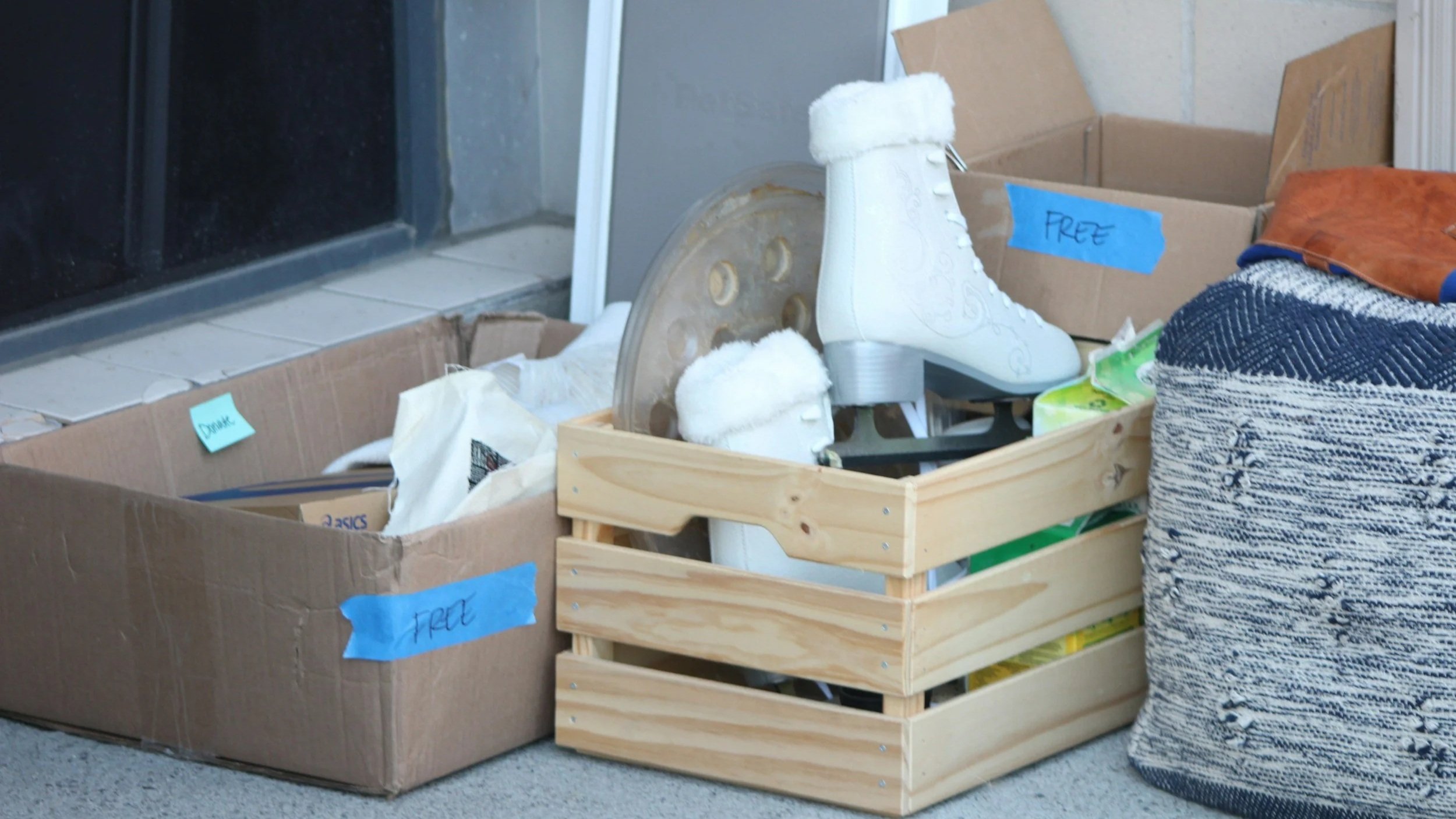
My favorite strategy is to schedule a donation pickup before we've finished decluttering. If a big truck is coming to get boxes from your front porch in 10 days, you’ll have serious motivation to fill those boxes!
For donation pickups, GreenDrop and Vietnam Veterans of America are two options to consider.
A Final Thought
You don't need to declutter your entire home in one day. Start small, make the process fun, and give yourself simple rules for deciding what stays.
If you're not sure where to begin, try this:
Spend 7 minutes finding items you can donate
Delete duplicate and unnecessary photos from your phone
Choose one drawer or small surface and spend 10 minutes decluttering it
Ask yourself "Would I buy this today?" about items you're unsure about
Schedule a donation pickup or drop-off and fill as many boxes as you’ve scheduled to be picked up
Decluttering FAQ
Q: What is the easiest way to start decluttering?
A: Start with a small, contained area and give yourself a short time limit, such as 7-10 minutes. A drawer, shelf, bathroom counter, or category of belongings is usually easier to tackle than an entire room.
Q: What is the 7-minute decluttering method?
A: The 7-minute decluttering method is a timed decluttering game in which you spend seven minutes finding items you no longer need or want. You can do it alone or with your family, and you can focus on donations, a particular room, or a specific category of belongings.
Q: How do I know what to get rid of when decluttering?
A: Ask yourself, "If I didn't already own this, how much would I pay to get it?" If you wouldn't spend much or anything on it today, you probably don’t need to keep it.
Q: How can I stay motivated to declutter?
A: Give yourself an external deadline by scheduling a donation pickup or drop-off. A specific deadline creates accountability and can make it easier to turn an intention to declutter into action.
Q: How often should I declutter my home?
A: This is a highly individual decision that can be based on many factors. A practical approach is to do small decluttering sessions weekly or monthly rather than waiting until clutter becomes overwhelming.
Want more tips?
If you’d like more tips like these, my popular Friday Five Newsletter is the best place to get tips like this every week!
Some of the above links create charitable donations when you click them. I only recommend products I have personally used and love! The way Amazon commissions work is that if you click on my link and buy literally anything (except gift cards), I get a small commission on that item. It does not have to be the item I linked. I cannot see your cart nor do I get an email saying, “Jazmyn bought dog food”. It does not cost you extra. If you are going to shop on Amazon and want me to get commission (so that we can donate it), you can always go to this page and use any of the links.

About The Author
Jessica Eastman Stewart is a consultant, workshop facilitator, and podcast guest expert. She teaches busy professionals how to get more organized at home and at work so they can stop feeling worn out and start living a Joyfully Managed Life®! Thousands of readers drop everything when her weekly newsletter, The Friday Five, arrives in their inbox. Every Friday, you’ll get FIVE amazing tips to help life feel INSTANTLY more joyful and easy!